Tending
On care that outlives us.

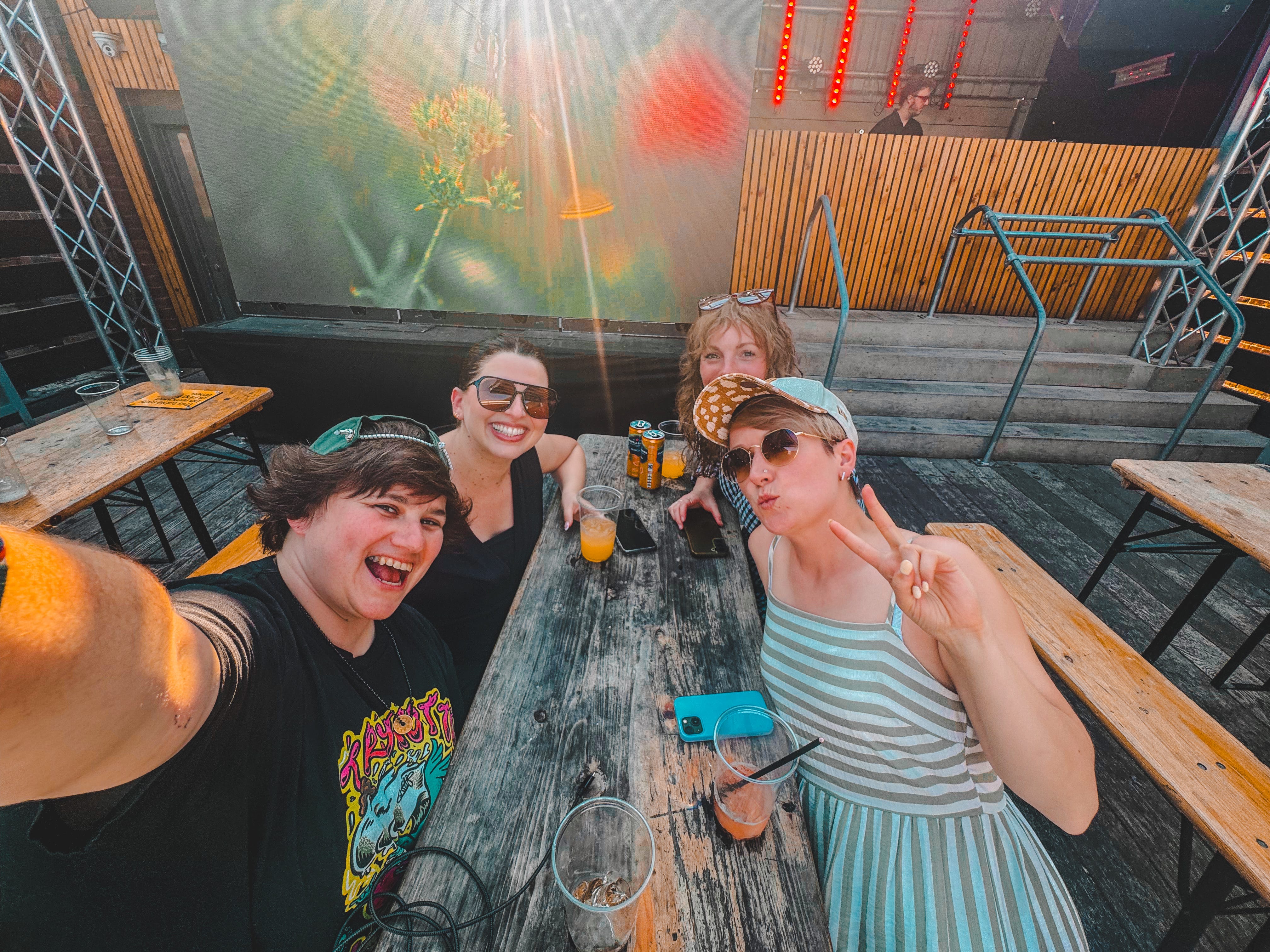
On Thursday afternoon, Tommy, Kev & I went over to Bawtry to visit Val - John Mo’s beloved partner. It was the first time we had gone to his house. We weren’t sure where we were going but we knew we had the right house because you could see from the street a big front bay window covered in sympathy cards.
We sat with Val, surrounded by nearly 100 cards in the living room.
I thought a lot about how many people wanted to reach out and how care returns.
/
The other day Liz told me she’d been to our local cemetery, on Redhouse Lane.
She and Matt had taken another 90-something veteran to visit Bernard. Bernard had lived well beyond a 100, and in the last years of his life Liz had become one of his constants.
If you’ve ever watched someone who is naturally good at caring, you’ll know it has very little to do with grand gestures. It’s phone calls/ texts that nobody else has time to make. It’s noticing that the prescription still hasn’t arrived. It’s knowing which forms need chasing and which rules can be quietly bent. It’s making sure someone who has spent a lifetime looking after other people doesn’t become invisible simply because they’ve grown old.
/
Bernard died, but Liz still goes to visit him.
She was telling me about the afternoon almost as an aside when she mentioned she’d wandered away from his grave and found herself picking litter up from around other headstones. She’d stood fallen teddies back upright. Brushed leaves away from names that had almost disappeared beneath them. Tidied flowers that had blown over in the wind.
I laughed because it was such a perfectly Liz thing to do.
Then, a little later, I realised it had stayed with me.
/
It wasn’t simply that she’d been looking after a cemetery. It was that, in some instinctive way, she hadn’t stopped caring just because there was nobody left to thank her for it.
I’ve thought about that afternoon more than I’d expected.
Perhaps because I’ve always had a peculiar affection for graveyards/sacred spaces/shrines.
/
People often assume that’s because I’ve spent enough of my own life in hospitals to have developed an unusual relationship with death. There may be some truth in that. Illness rearranges your perspective in ways that are difficult to explain to people who haven’t had to live alongside uncertainty.
Still, I don’t think that’s why I visit cemeteries & otehr sacred spaces.
I go there because they’re among the few places left that seem to resist urgency.
Nobody hurries through a graveyard.
/
The conversations become quieter. The world, for a little while, agrees to move at walking pace.
I’ve never been especially interested in finding famous graves. I much prefer the ordinary ones. The headstones whose names mean nothing to anyone except the handful of people who once loved them.
Beloved wife.
Treasured dad.
Forever in our hearts.
A life compressed into a sentence.
There is something unexpectedly reassuring about that compression. At a time when we’re encouraged to build personal brands, optimise our productivity, leave legacies and accumulate achievements, graveyards offer an entirely different accounting system. They are almost embarrassingly uninterested in whether somebody answered every email, reached every career milestone or finally bought the bigger house.
/
Instead they ask quieter questions.
Who loved you?
Who did you love?
Who still comes to visit?
/
John Mo’s death has nudged these questions closer to the surface.
Grief has a strange way of illuminating things that weren’t previously hidden so much as overlooked. It isn’t only that you miss someone. It’s that their absence quietly changes the scale against which you measure your own life. And the gap that there is after them.
/
Over the last few weeks I’ve caught myself making an inventory of things I’ve been meaning to do for years.
Visit more cemeteries.
Cycle the TPT that i’ve been wanting to do for years.
Write letters instead of thinking about writing them.
Spend an afternoon drawing without needing it to become work, income or output.
Read the books that have been waiting patiently on my shelves instead of getting wooo’d over by new ones in bookstore windows.
/
The striking thing about this list is how ordinary it is. None of these ambitions require extraordinary courage or impossible amounts of money. They aren’t waiting for retirement or a lottery win. Most of them could happen on an ordinary Tuesday afternoon.
Yet somehow they don’t.
/
I’ve realised that, for years, I’ve quietly assigned these small longings to a fictional future version of myself. That version of Smizz is healthier than I am. Less tired. Less overwhelmed. She has finally replied to everyone, finished every project, sorted the washing, caught up with the paperwork and reached the magical point where life becomes spacious enough to begin properly.
The longer I’ve lived with illness, the less I believe she exists.
There is always another appointment. Another deadline. Another person who needs something. Another administrative task demanded by having a body that occasionally refuses to cooperate.
If you wait until life becomes uncomplicated before you start living it, you may spend your whole life waiting.
Perhaps that’s why I have another habit that has only recently started making sense to me.
Whenever I arrive somewhere new, I almost compulsively begin walking.
I don’t mean wandering. I mean systematically squaring the place.
I’ll find the library, the cemetery, the community centre, the café where older people linger over tea, the mural tucked behind the supermarket, the overlooked path beside the river.
It’s as though I can’t really know somewhere until I’ve found the places where memory gathers.
For years I thought this was just one of my eccentricities.
Now I wonder whether I’ve always been searching for the same thing.
Not landmarks.
Evidence.
Evidence that people have lived here. Loved here. Fought here. Cared for one another here.
/
Perhaps that’s what has always drawn me towards community work. Perhaps it’s why I make art. Both feel, increasingly, like ways of paying attention to lives that might otherwise pass unnoticed.
John understood that instinct better than almost anyone I’ve known.
People first, always.
He never seemed particularly interested in impressive things. He was interested in people. He noticed them. He remembered them. He made room for them.
When Liz told me about quietly straightening children’s teddies on forgotten graves, it struck me that she was speaking the same language.
Care, at its deepest, isn’t transactional.
It doesn’t ask whether anybody is watching.
It doesn’t even ask whether the recipient is still alive.
It simply continues.
Perhaps that’s why graveyards feel strangely hopeful to me.
Not because they remind us that we die. I hardly need reminding. But because they remind us what remains when almost everything else has fallen away.
A name.
A relationship.
An act of kindness.
Someone who still turns up.
The older I get, the more I suspect that creativity belongs in that same family. Not as performance or achievement or legacy, but as another form of tending. Another way of saying: I noticed that you were here. I wanted, however briefly, to leave the world a little more cared for than I found it.