Day 60: Between Light and Waiting
the kind of place where stillness is not empty but alive (Photo & Hospital Poem Essay)

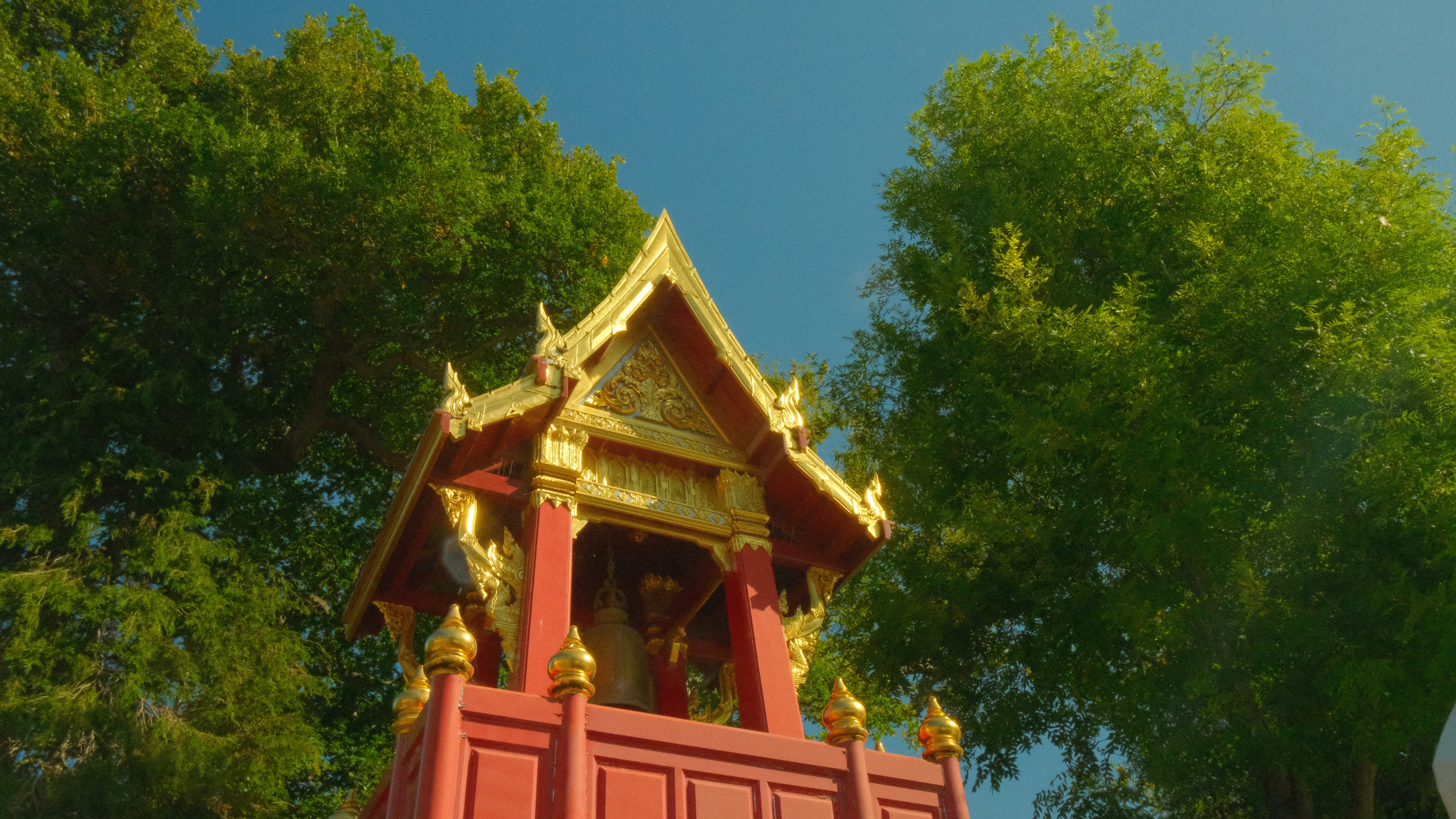
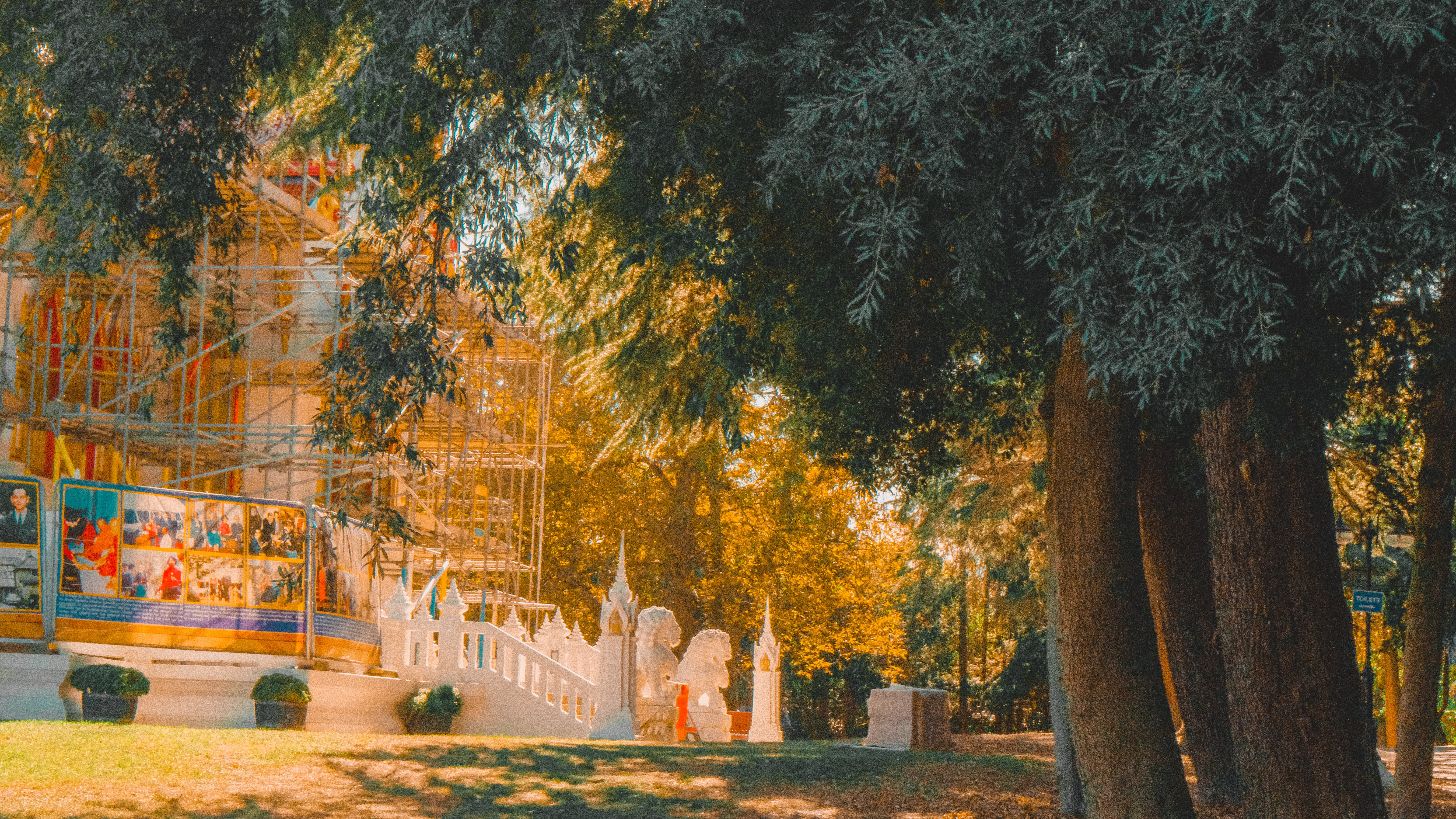
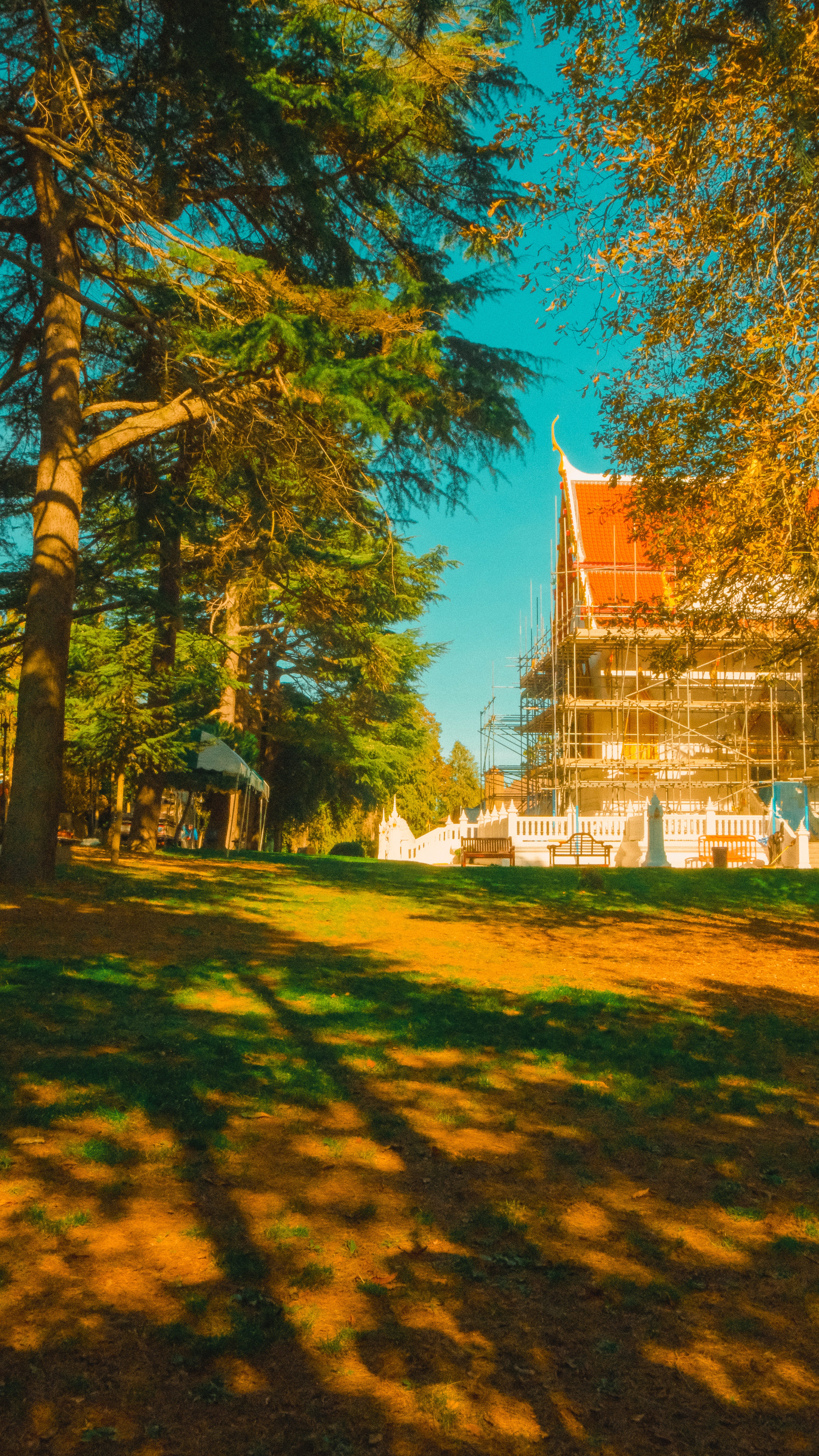
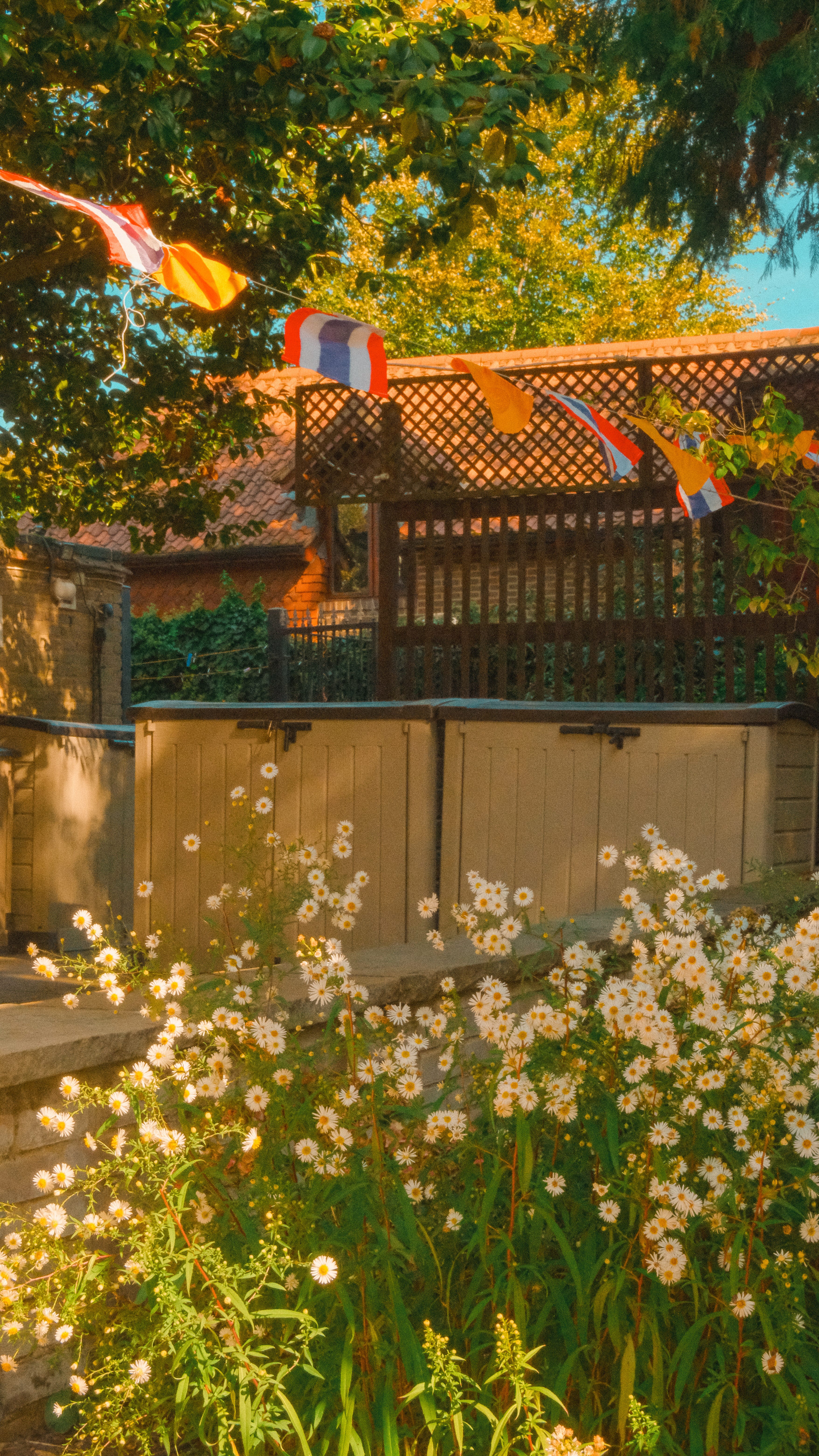
This week I visited Buddhapadipa Temple in Wimbledon. A temple of painted walls and golden Buddhas, where light fell through the lush canopies of leaves & trees, and where shadows gathered gently in corners.
It is the kind of place where stillness is not empty but alive. The air itself seems to hold its breath.
/
And as I walked the grounds, circling the lake, watching the ripples of light on the water. I found myself circling the idea of waiting.
My life is structured by it now. Waiting rooms. Waiting lists. Waiting for results that may reconfigure everything. The hours between scans and calls, the long silences where nothing happens and yet everything is at stake.
/
If time is a great healer, then is waiting its shadow?
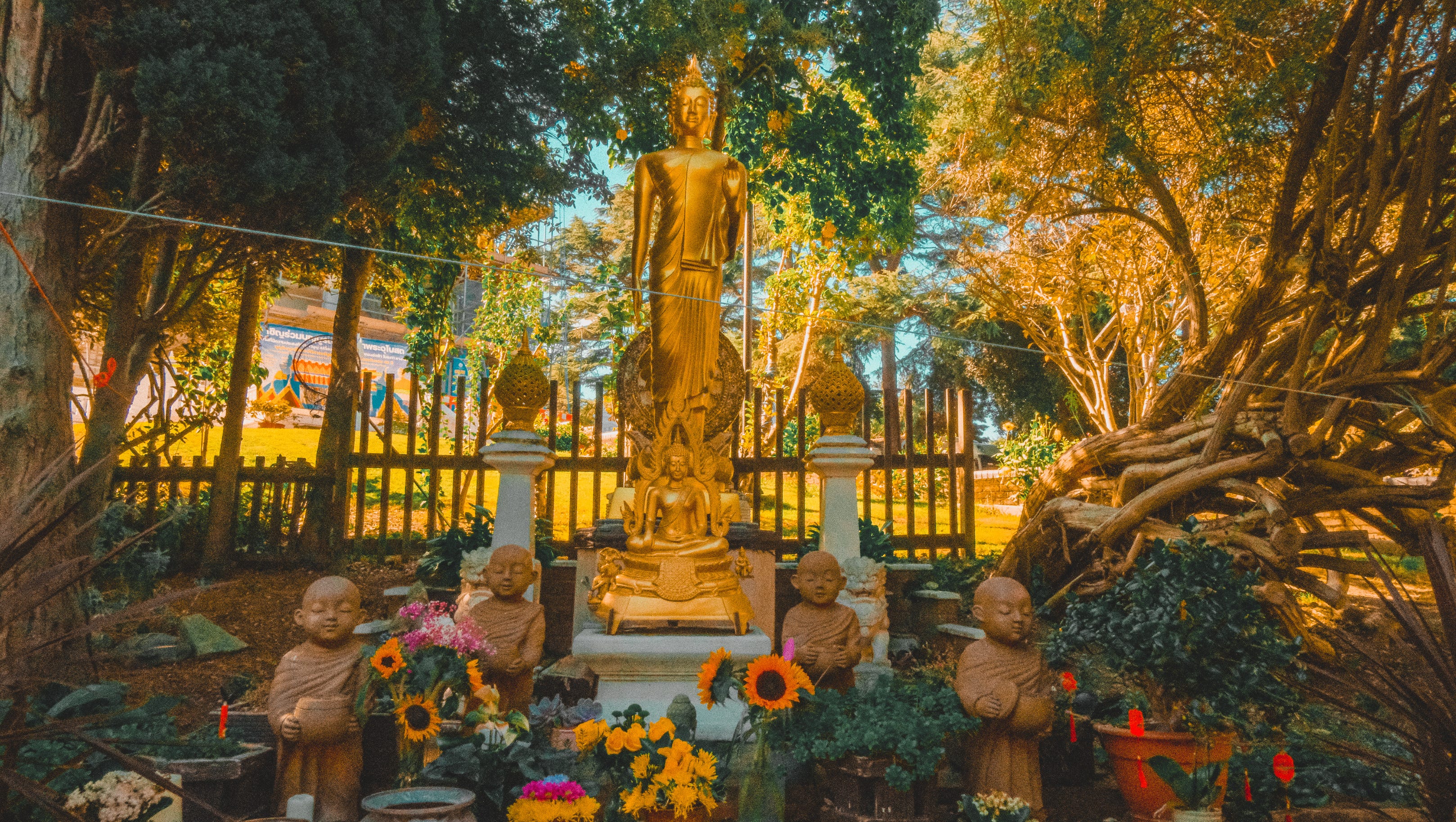
Inside the temple, the golden Buddha caught the afternoon sun and glowed. In that moment, I felt suspended. No diagnosis (yet), no certainty (yet), just this: light, shadow, breath. It struck me that waiting itself is a meditation, though a brutal one. A practice in holding the unknown.
/
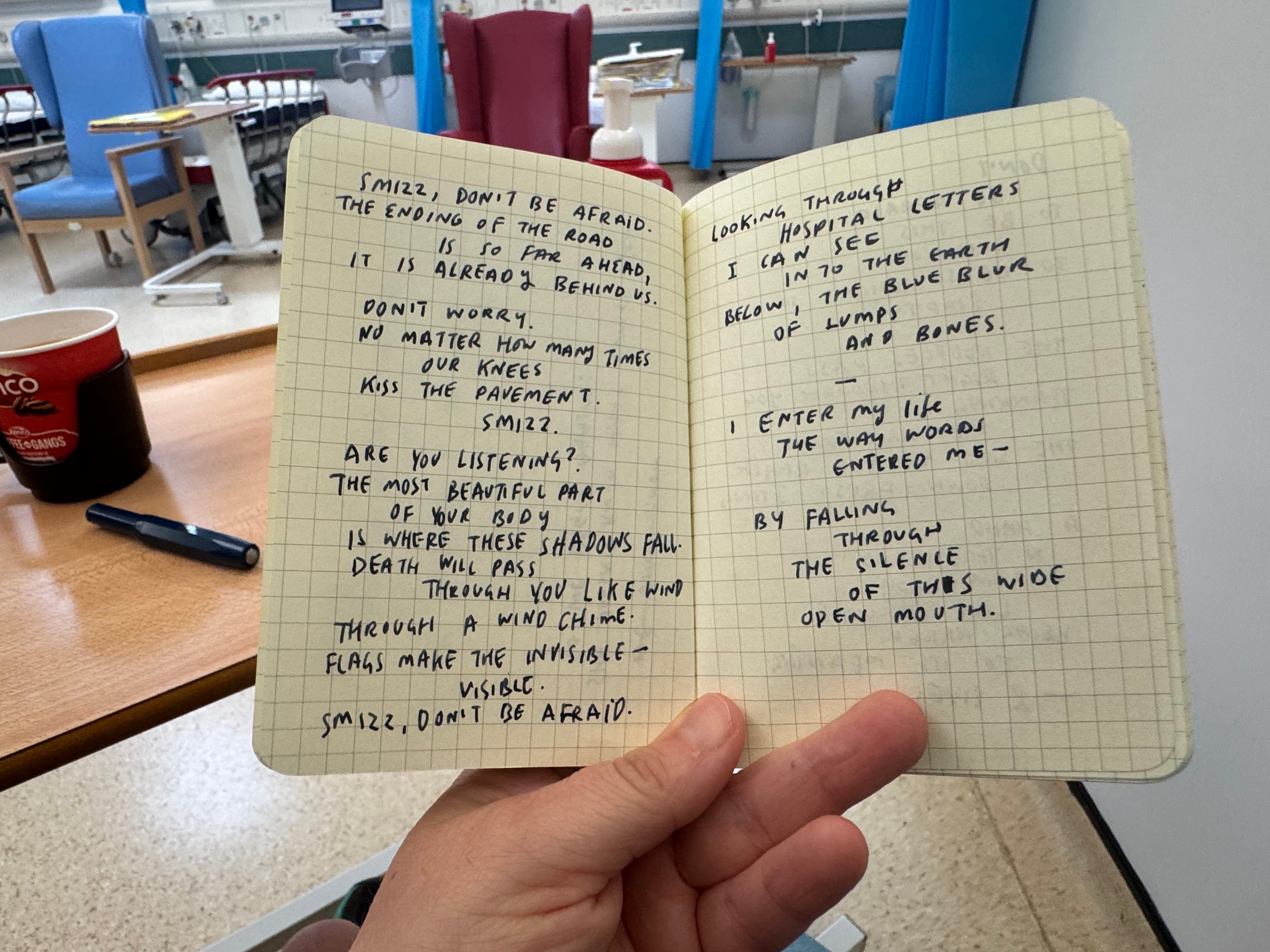
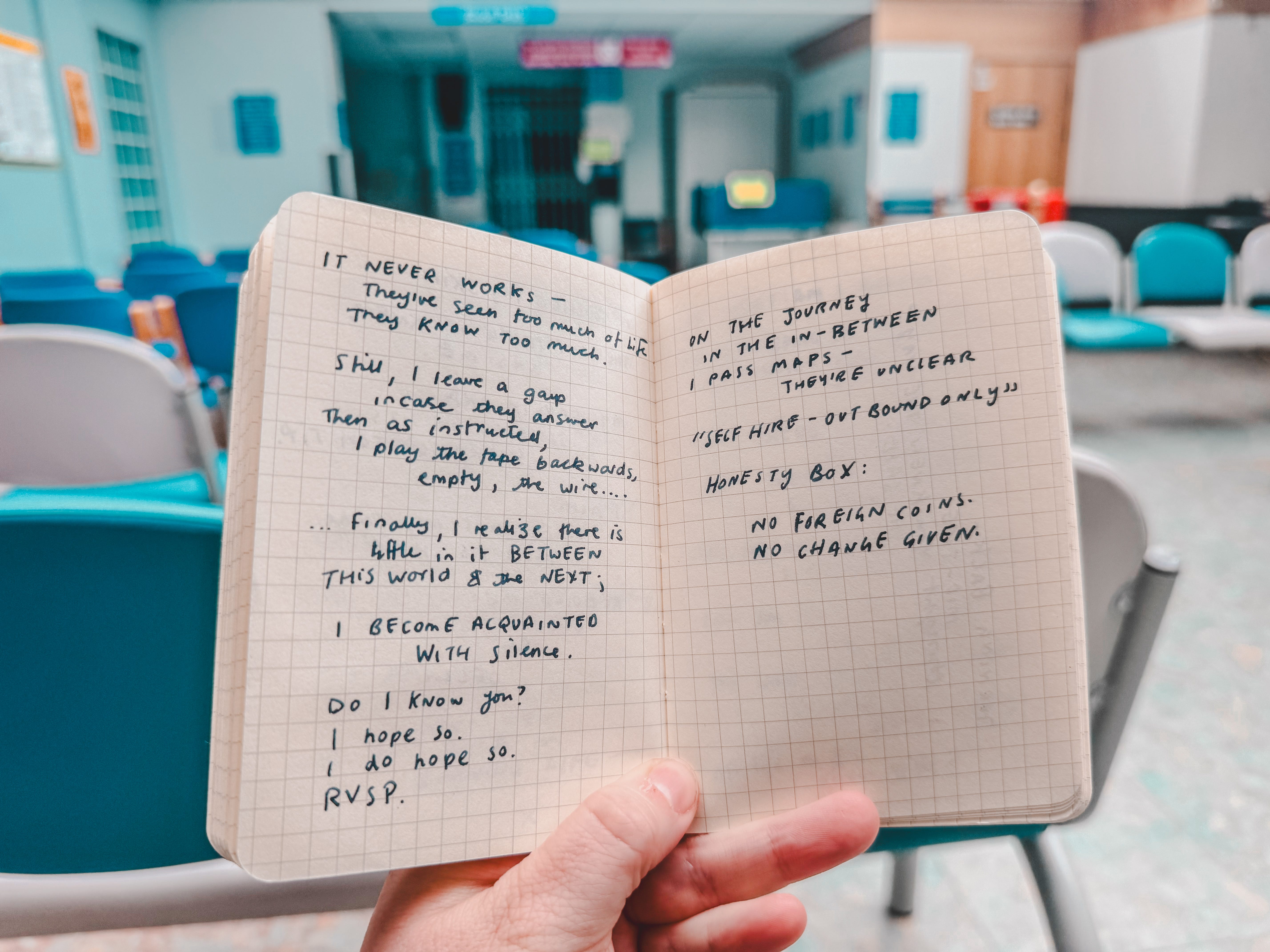
Hospitals are their own temples. No one names them that, but I feel it in my bones. The fluorescent light is a kind of candle. Corridors stretch like cloisters. The pews: plastic chairs worn down by years of bodies learning patience. And the rituals: your name called, blood drawn, numbers flashing across screens. A liturgy of patience and fear.
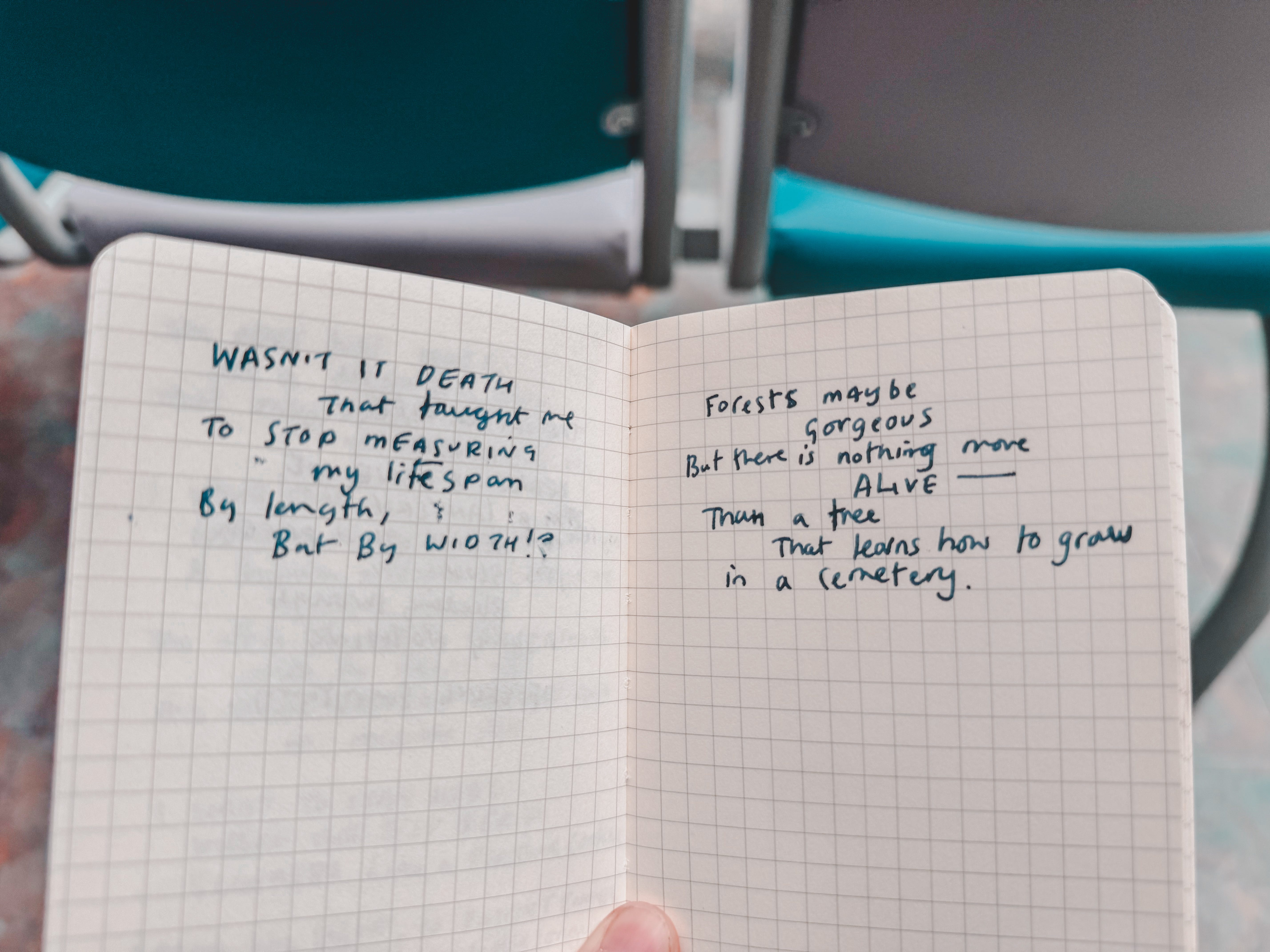
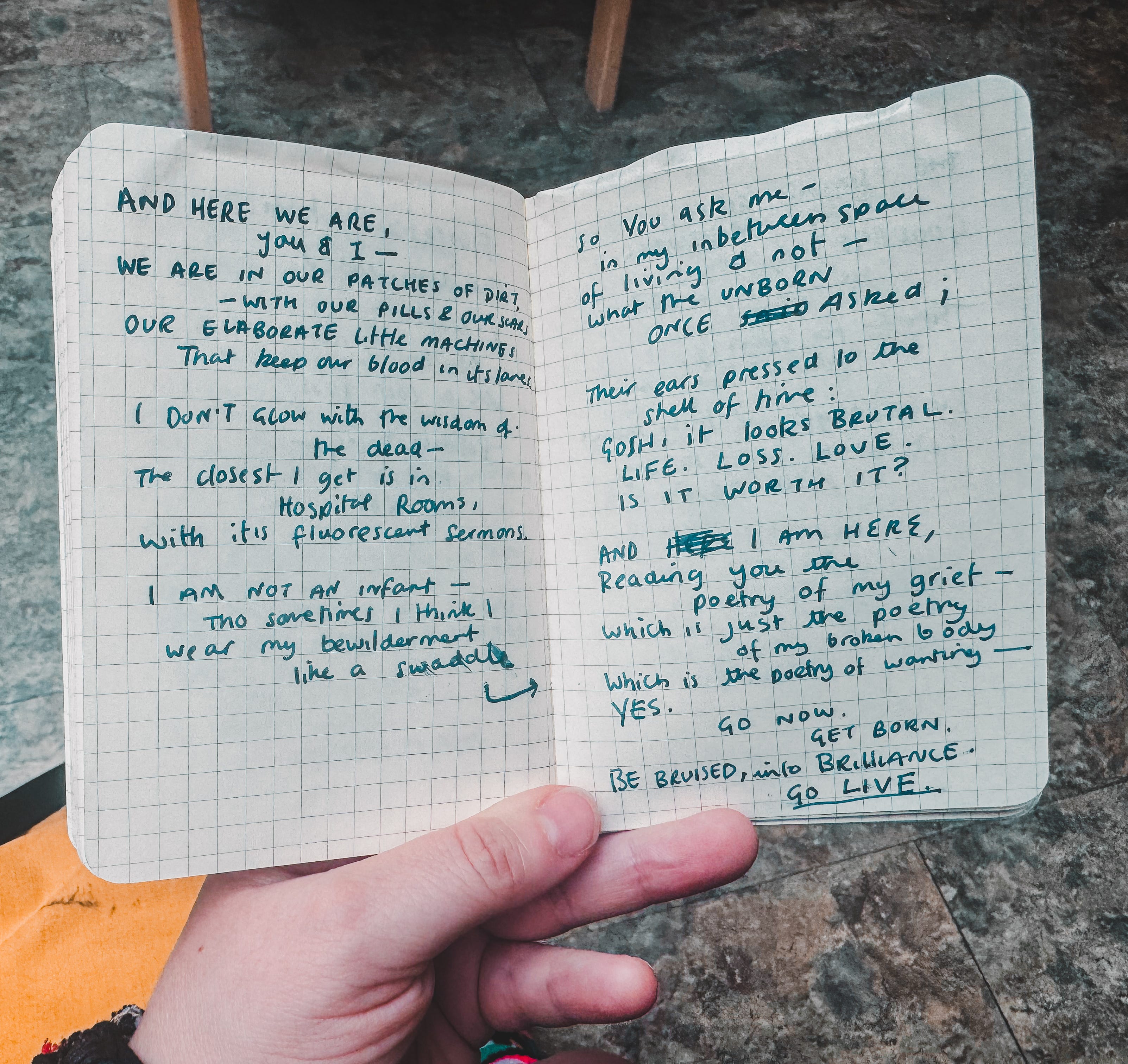
And here too, I write. Not long poems, not polished thoughts, but fragments. Little words scribbled on the edge of time. They pour out of me in this space, as if coming from something else entirely.
At Buddhapadipa, & in many buddhist temples I have visited, the murals told stories of the Buddha’s life: his suffering, his trials, his transformation.
Even pain was painted with gold.
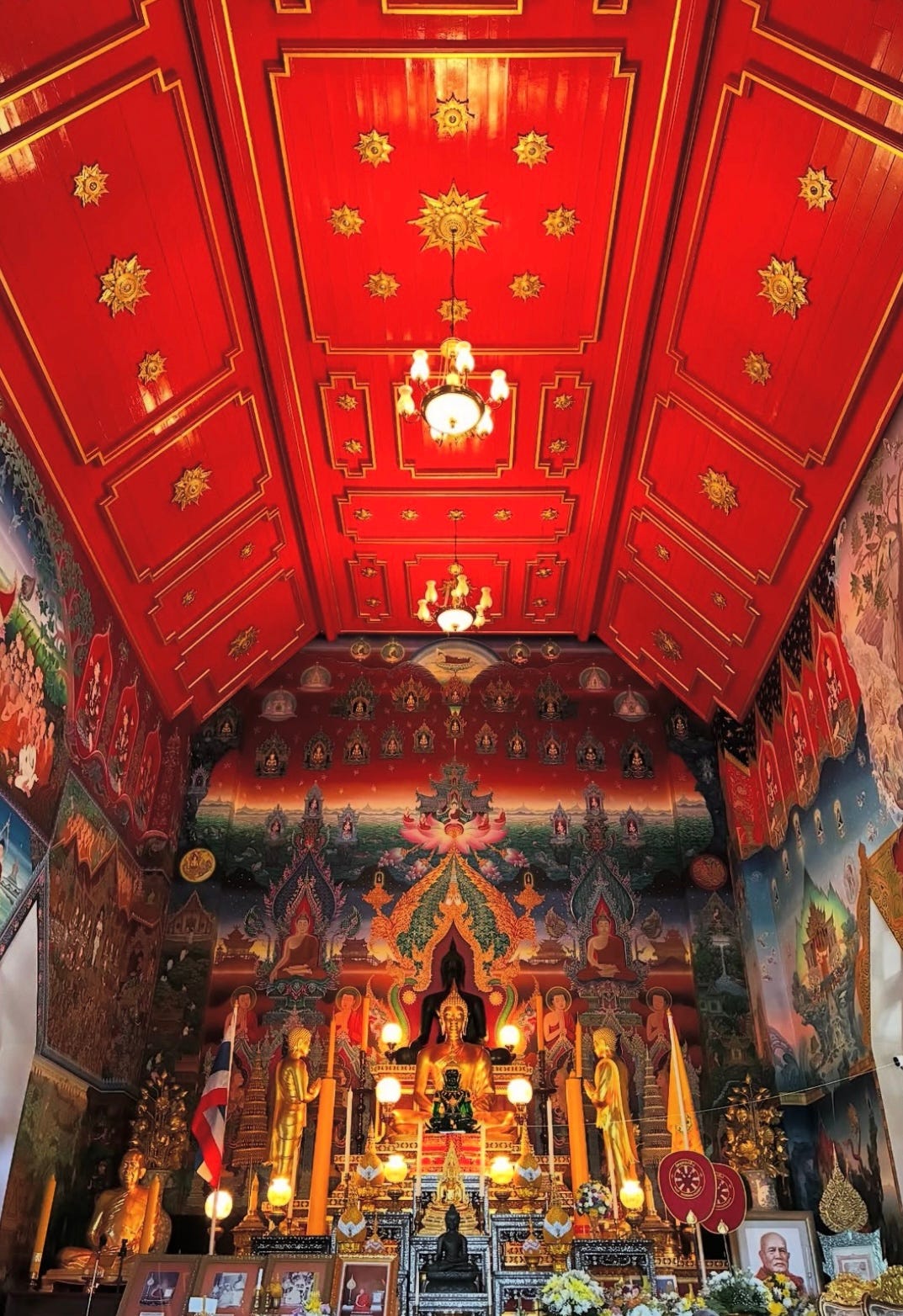
I wonder: what would it mean to gild my waiting? To treat these fragile hours, these suspended days, not as wasted time but as part of a story?
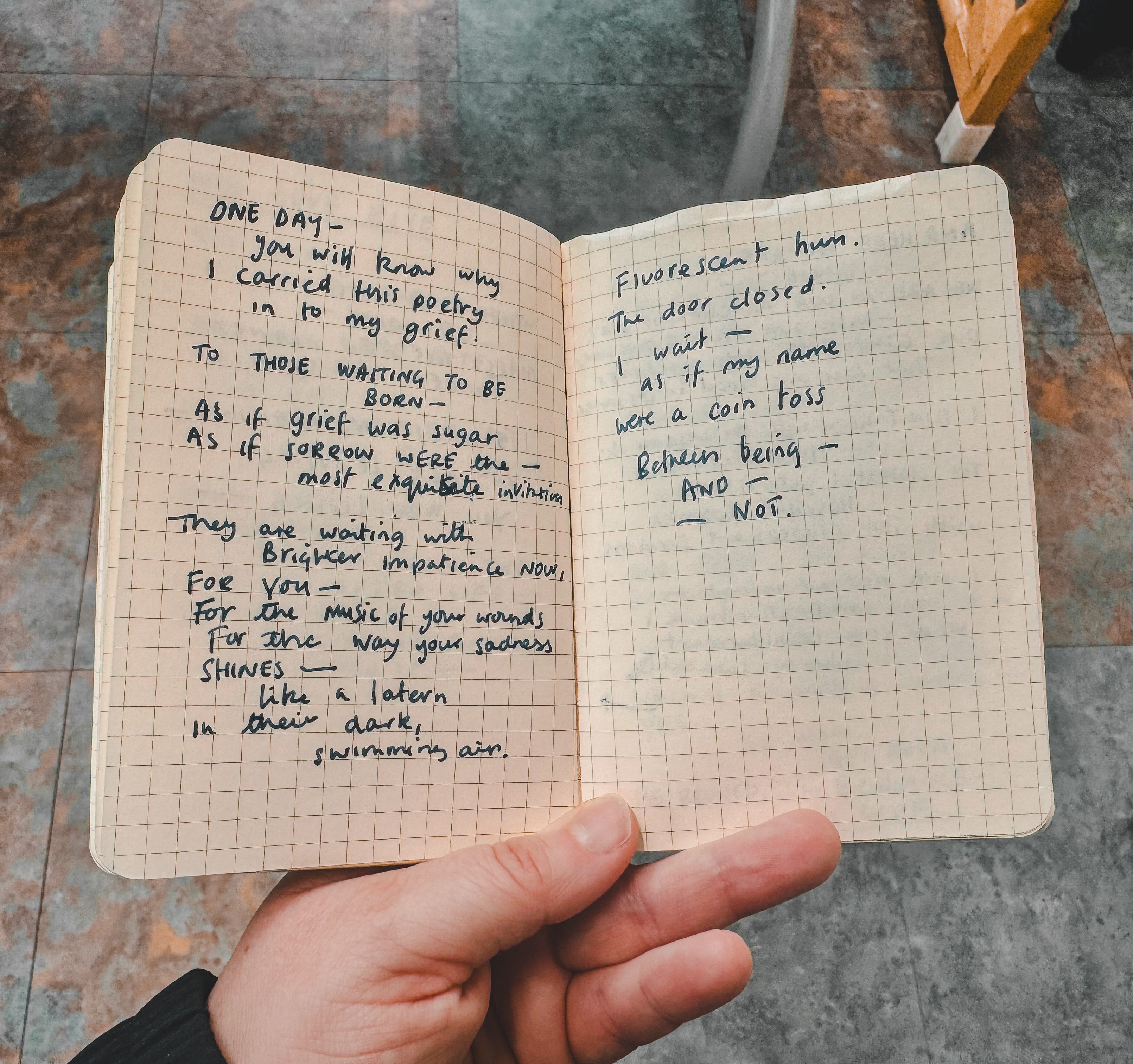
By the lake, I watched reflections shift across the surface. The water appeared still until the light revealed ripples beneath. Waiting is like that: outwardly still, inwardly full of movement.
And perhaps this is what life is: the in-between. Between birth and death. Between diagnosis and healing. Between knowing and not knowing.
/
I have thought a lot about the afterlife in these waiting spaces. Not as a far-off heaven, but as something brushing up against the edges of the present. In Buddhism, death is not an ending but a transformation.
Maybe the afterlife is not separate from life, but braided through it: the way shadow is braided with light.
/
The truth is, I am a bit afraid. Afraid of words I cannot take back once they are spoken. But beneath the fear is something else:
a fragile curiosity.
What if waiting is not wasted? What if it is teaching me something about how to live? About how to sit with uncertainty, how to let the mystery be present without resolving it.
Maybe all of life is a rehearsal for death. Maybe every waiting room is a threshold, teaching us how to stand in the doorway of the unknown.
Hospitals and temples both hold that threshold. In both, I am reminded that the in-between is not absence. It is where everything lives: the fear, the stillness, the flicker of hope.
At Buddhapadipa Temple, I understood something I had only felt at the edges before:
waiting is not empty. It is sacred.
It is the chamber where all the contradictions of being alive gather and breathe together. Light and shadow. Fear and faith. The question and the prayer.
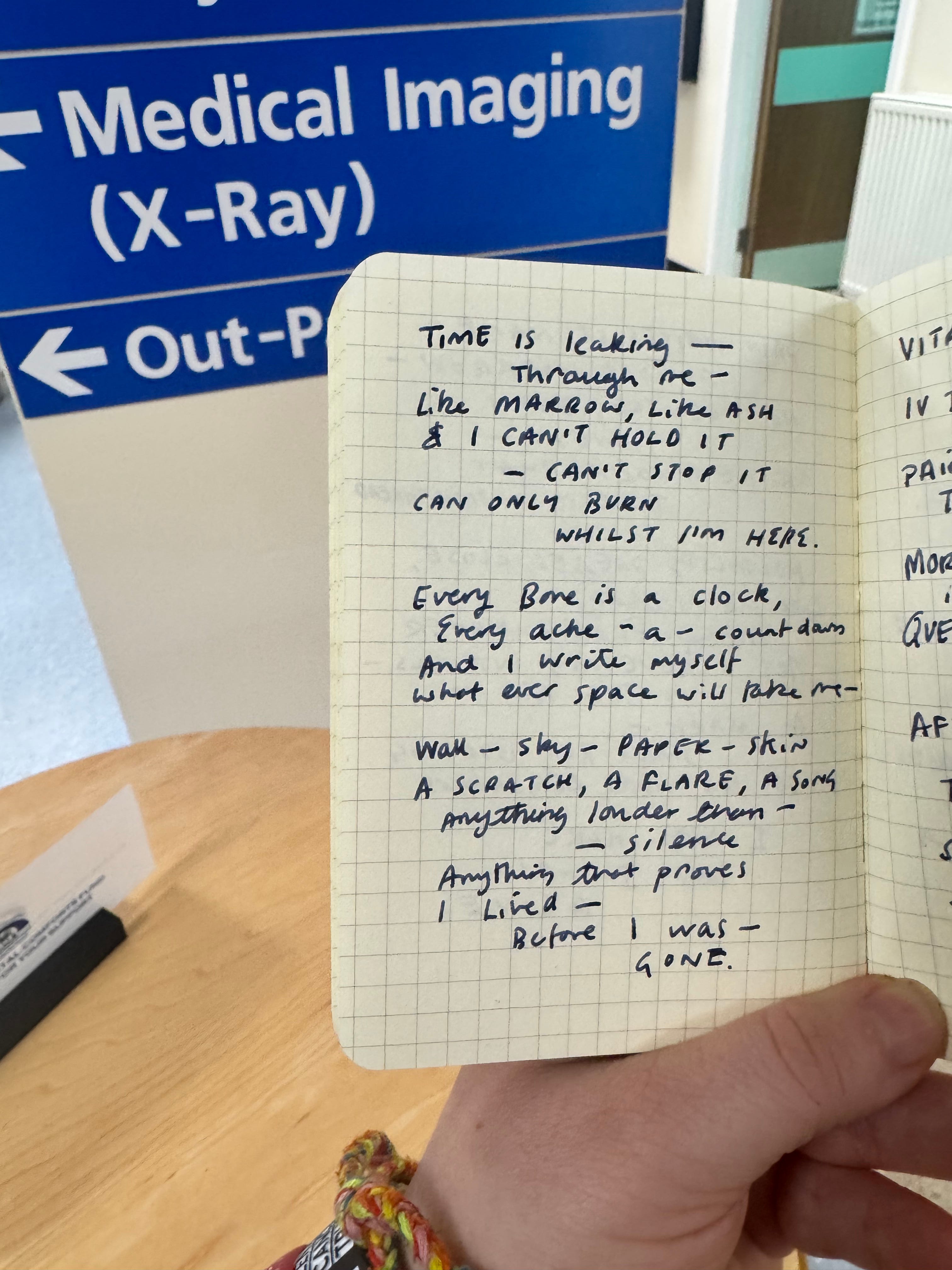
Waiting is not absence. It is the fullest presence: where we are stripped of illusions of control, where we stand at the raw edge of uncertainty and still dare to breathe.
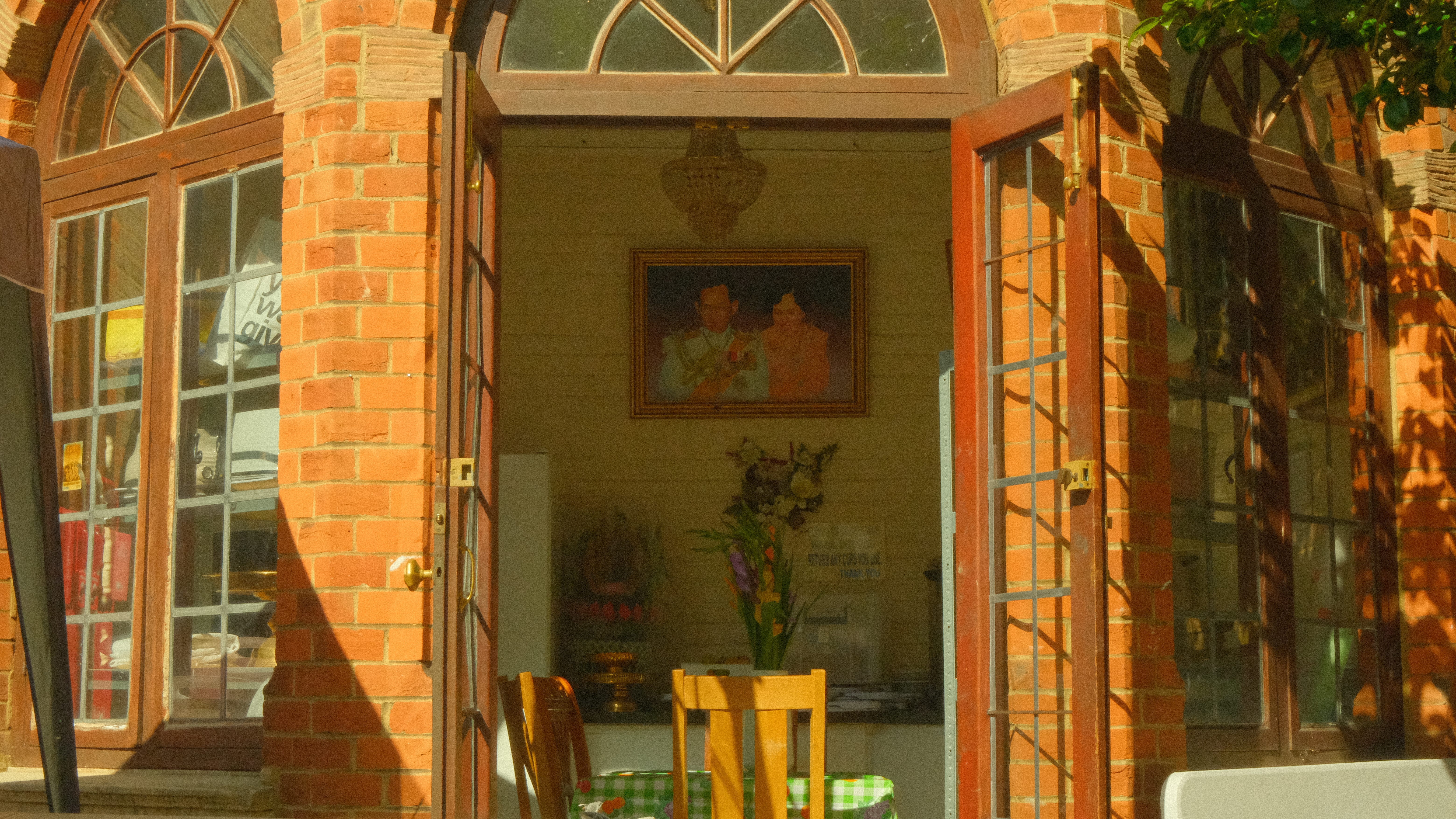
The work is not to escape the waiting. The work is to inhabit it fully. To let the in-between become a teacher, showing me that life does not only happen in answers or arrivals, but here:
in the fragile, trembling space of not knowing.
To live inside the waiting is to live inside the truth of being alive: nothing guaranteed, everything illuminated.