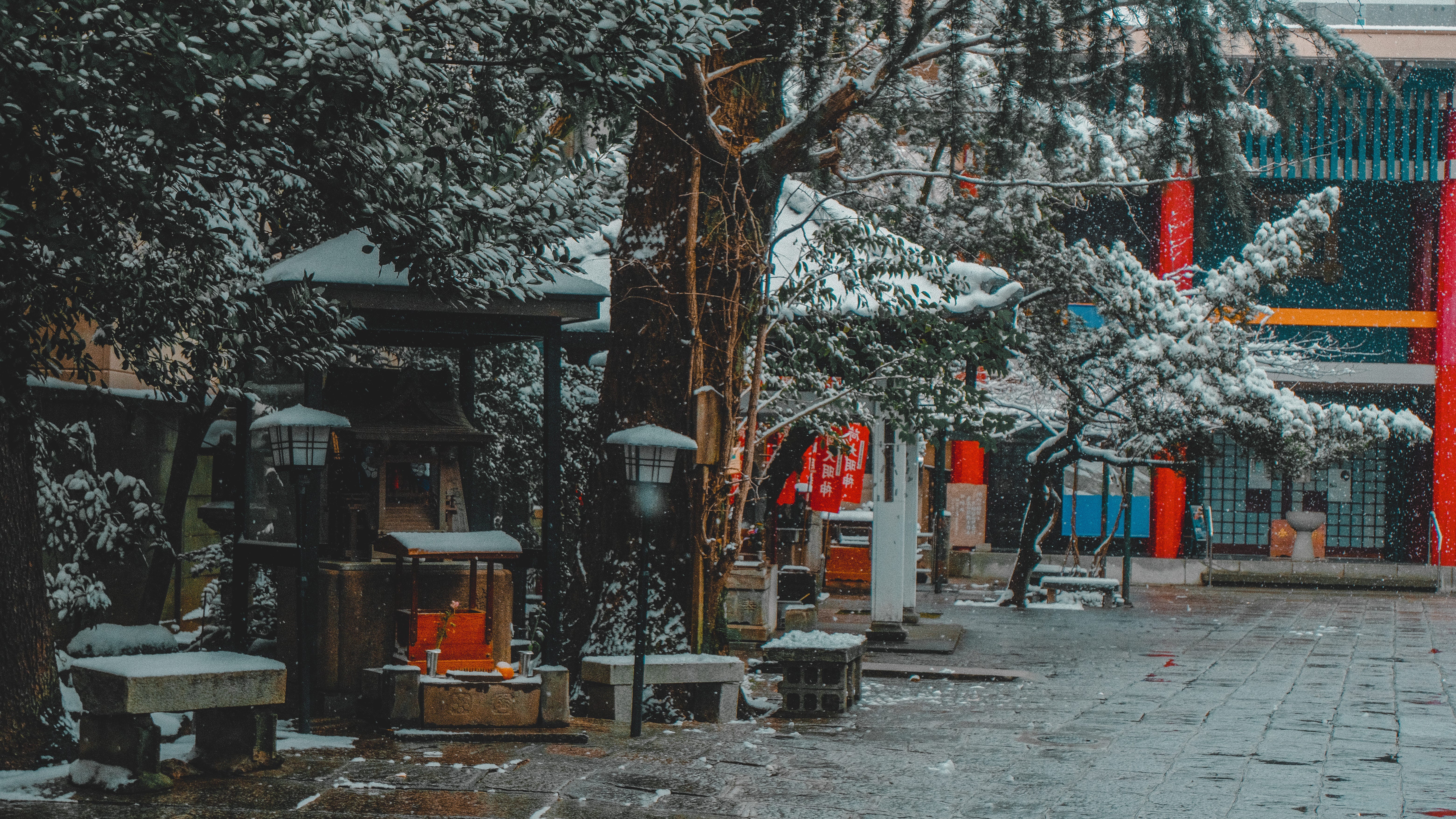
Day 10: Snow / Gate / Breath

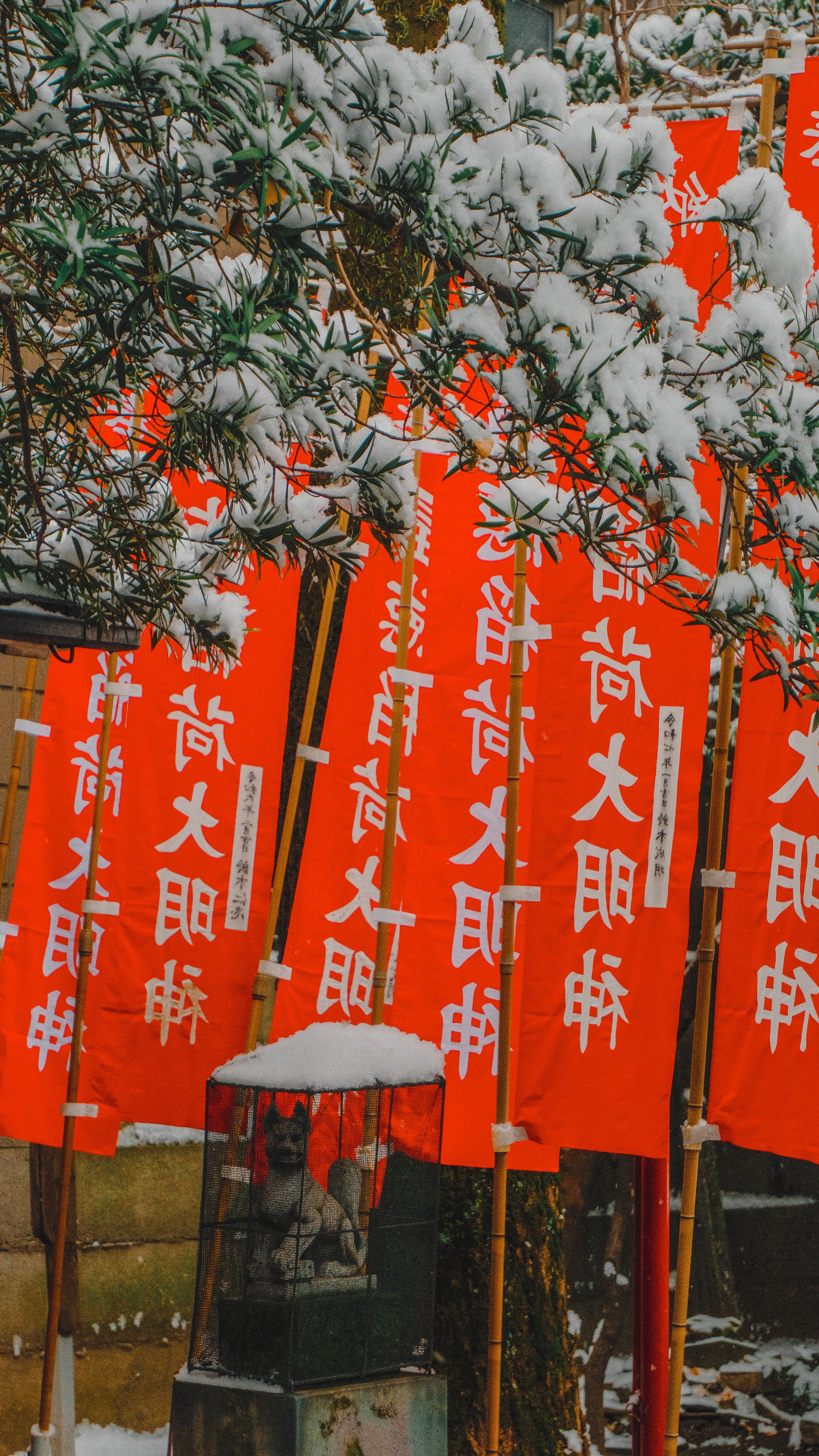
I woke to snow in Tokyo.
Not a suggestion of snow. Not sleet pretending. But thick, unashamed, cathedral flakes. The kind that fall as if the sky has decided to forgive everything at once.
/
The night before, my body had been loud. Nosebleeds that felt biblical. Fatigue pressing down behind my eyes. The kind of exhaustion that asks how long will you keep running. So I surrendered. Slept in. Or tried to. 9:30, the soft shuffle of the room cleaner breaking through the capsule’s thin walls, a reminder that even rest is porous.
/
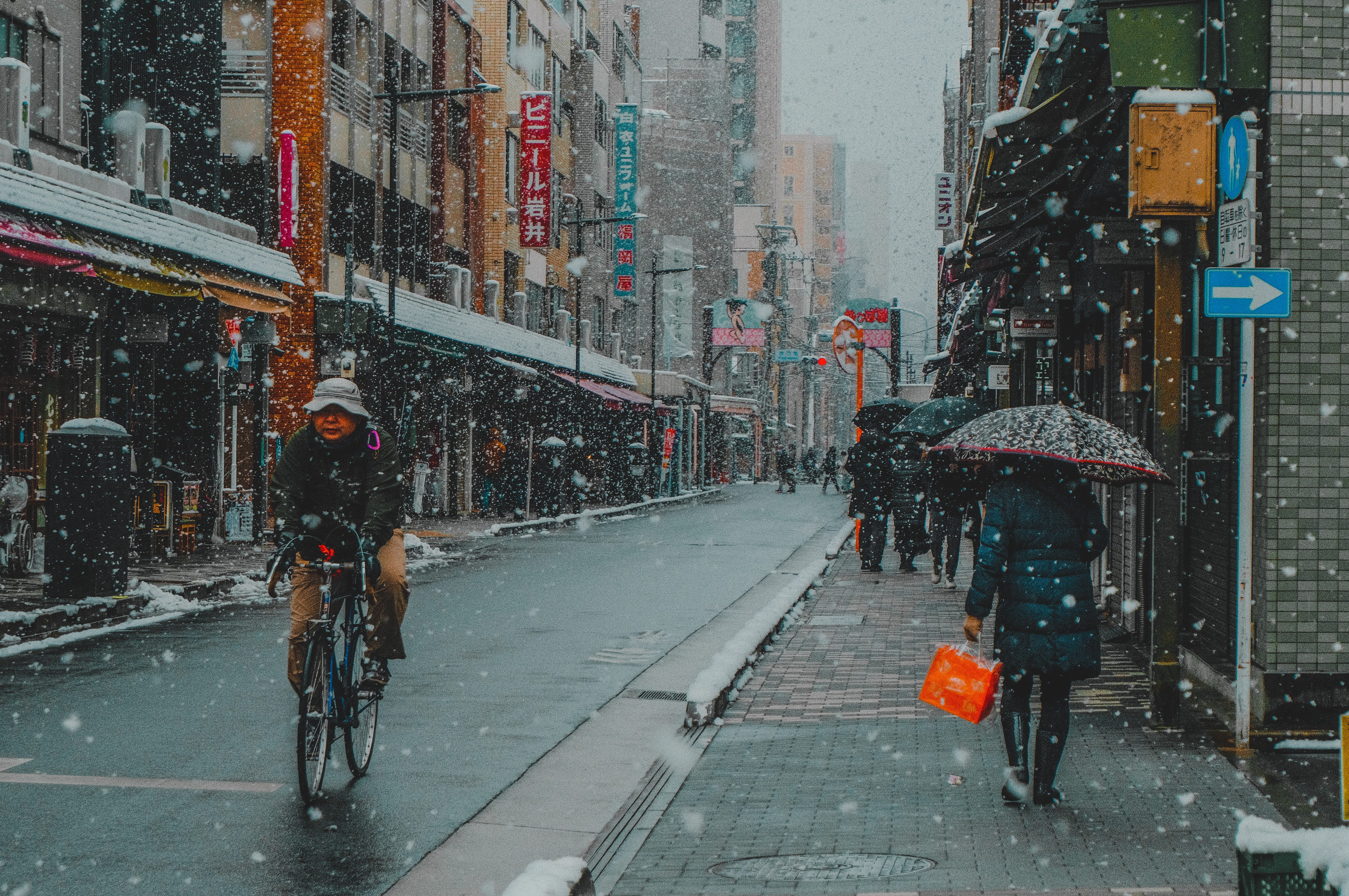
And then white.
Snow here is rare. Tokyo averages only a handful of proper snowfall days each winter. Often it is barely enough to settle, a dusting that dissolves before lunch. But when it truly snows, the city slows. Trains hesitate. Umbrellas tilt upward. The choreography changes.
/
Today it was Generous.
Children competed not by throwing snowballs at one another, but by measuring distance.
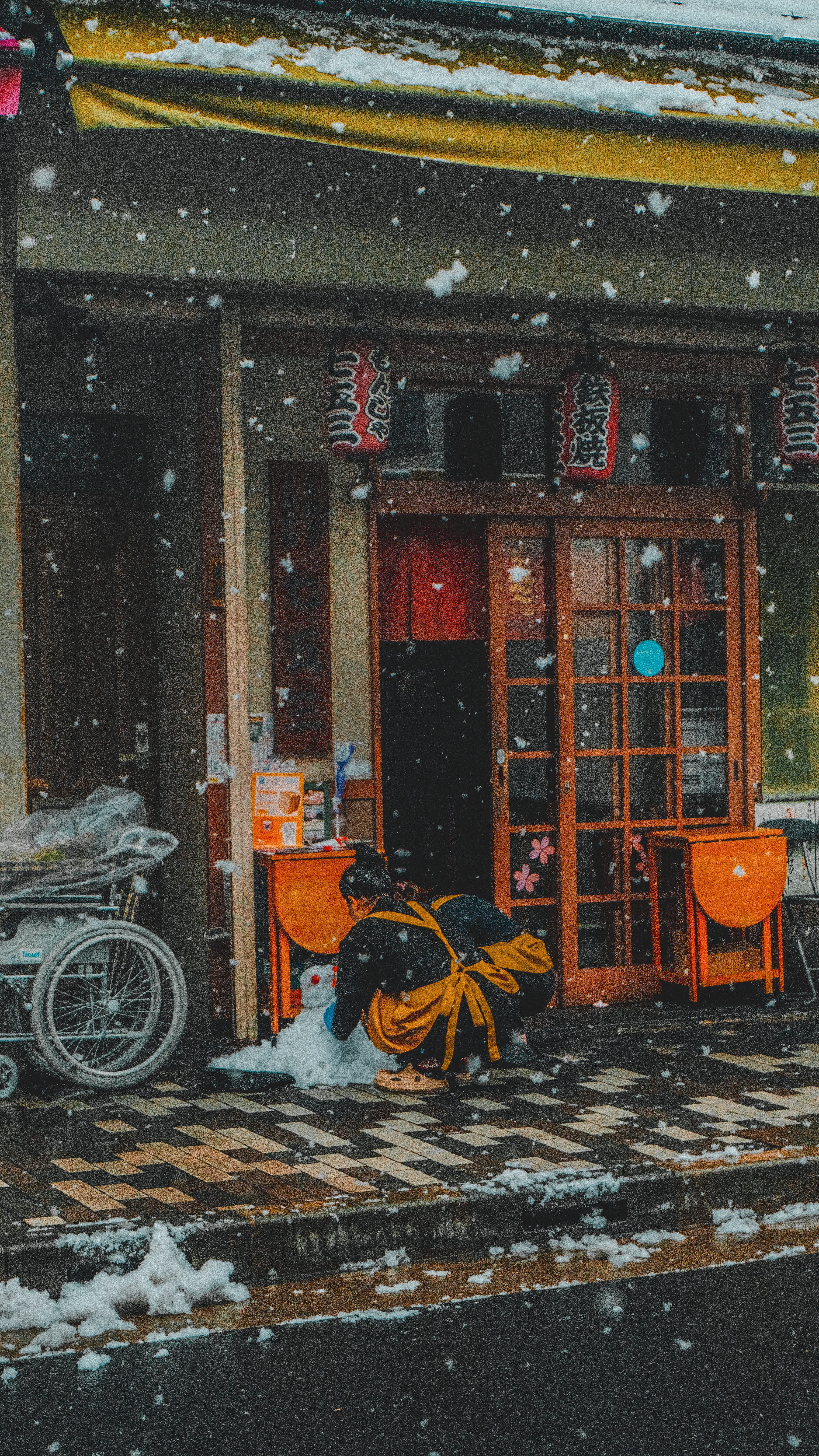
Shopkeepers sculpted tiny snowmen outside their doors. One girl used a dustpan to gather more snow to make a bigger snowman. Even delight, here, is intentional.
/
I went searching for shrines (for a change, lol!)
I’ve learned from the past to not go to places like Shinjuku and Harajuku on a weekend, unless you want to be squashed or overstimulated. Instead I wandered sideways into quiet neighbourhoods where the snow had already begun its work of silencing.
/
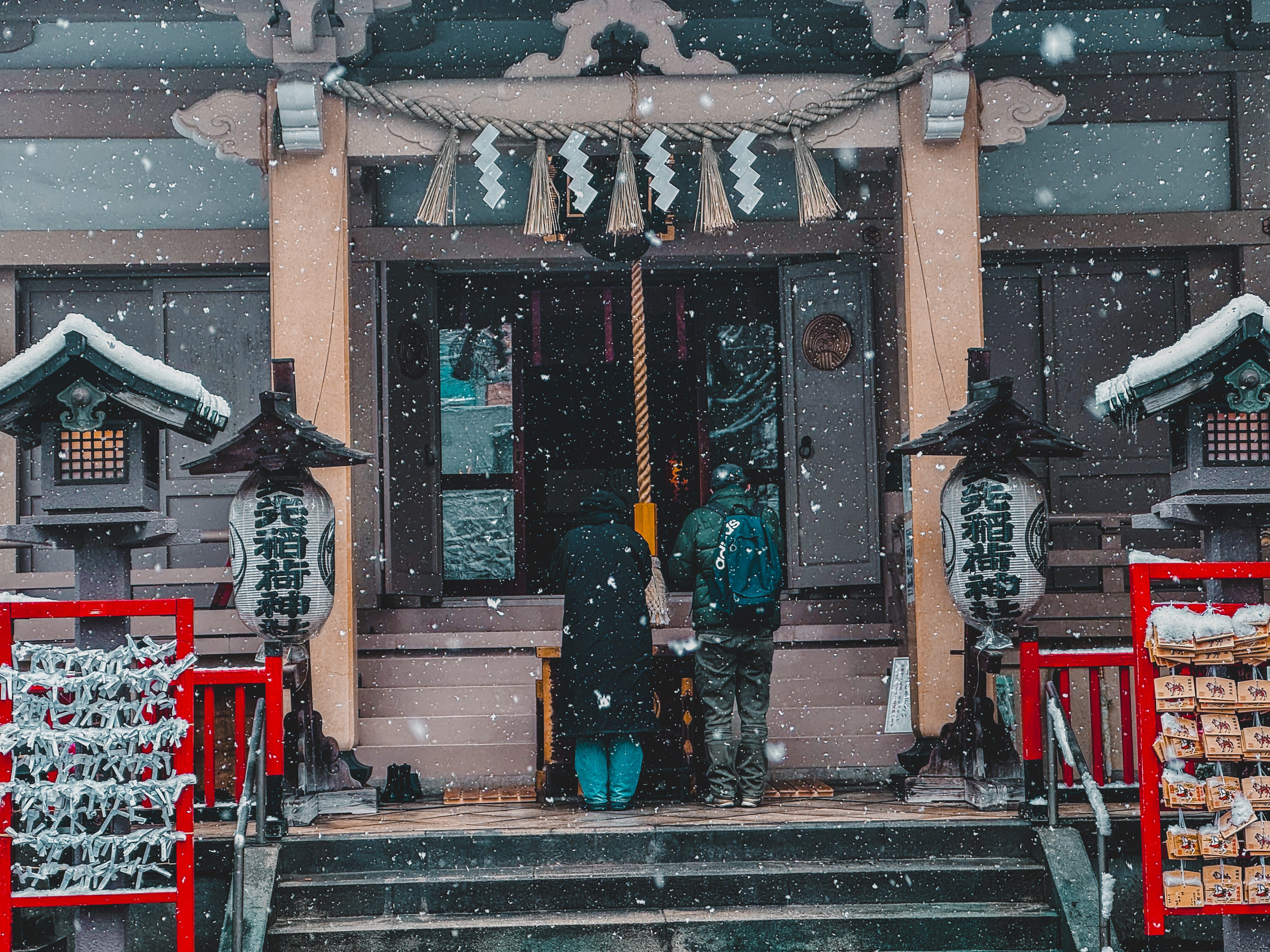
And there they were. Everywhere.
Torii gates turning white.
A torii gate is not a door. It does not close. It does not protect. It simply marks a threshold, the crossing from the mundane into the sacred. Traditionally painted vermillion to ward off evil, built of wood or stone, it stands as a reminder that there is another way of seeing this place.
You pass under it. That is all.
But passing under it changes you.
/
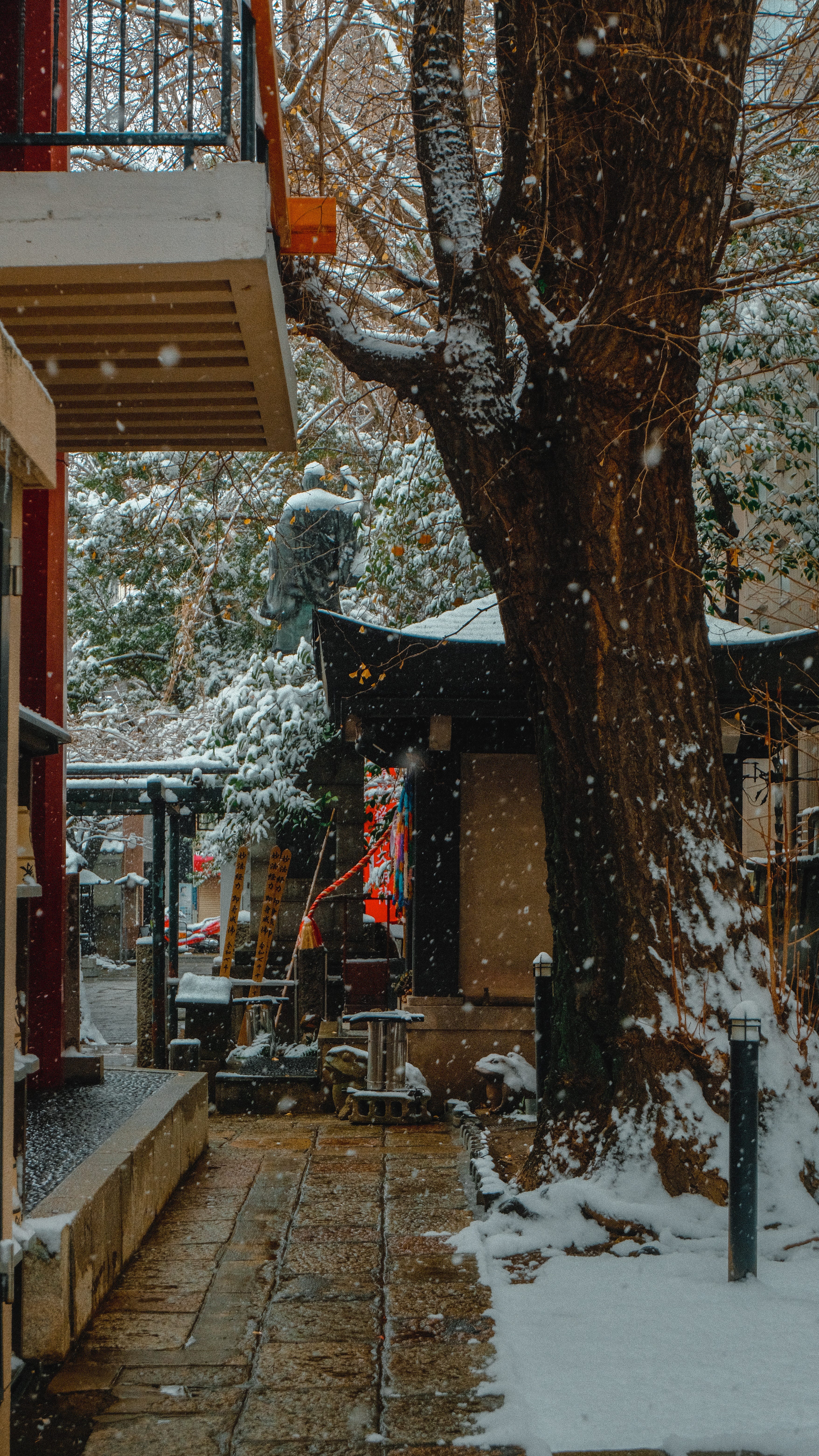
In Shinto, the gate signals the presence of kami, spirit, essence, the aliveness within things. In Buddhism, everything you pass beneath is already dissolving. Snow understands this better than we do.
/
Snow is the most honest teacher of impermanence.
It falls, and for a moment the world looks complete. Finished. Perfected. As if nothing has ever been wrong. Then it melts. Leaves no monument. Only memory.
/
At a small Buddhist cemetery, I stood while flowers sagged under the weight of white. Offerings half hidden. Buckets for grave cleaning, each labelled with family names, slowly disappearing.
The snow did not discriminate. It covered grief and devotion equally.
/
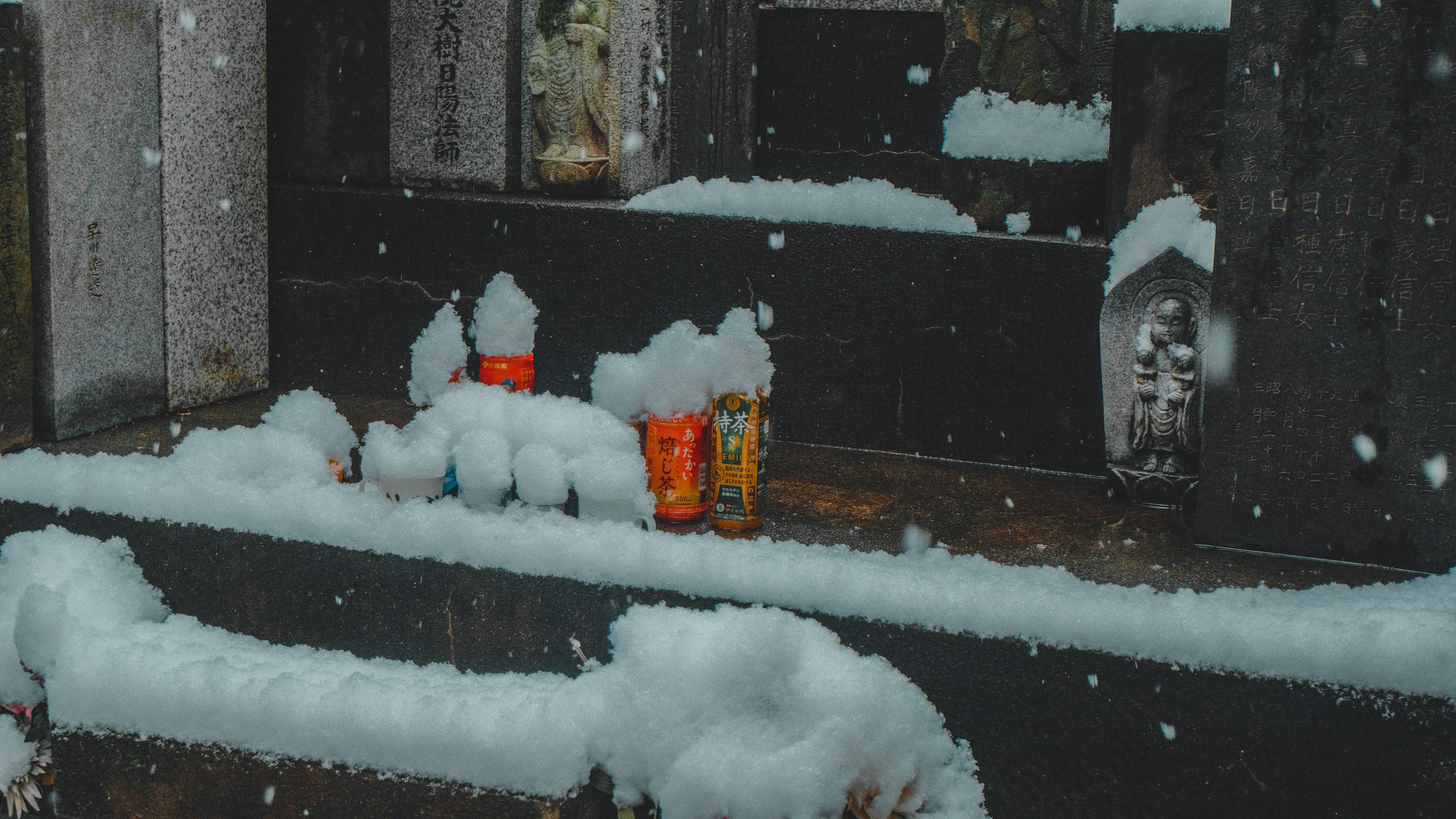
I thought about anicca, the Buddhist teaching of impermanence. That nothing, not even suffering, stays fixed. The body bleeds. The body heals. The body weakens. The body strengthens. Snow falls. Snow vanishes. The gate stands. The wood rots. The red paint fades.
Everything is in motion.
/
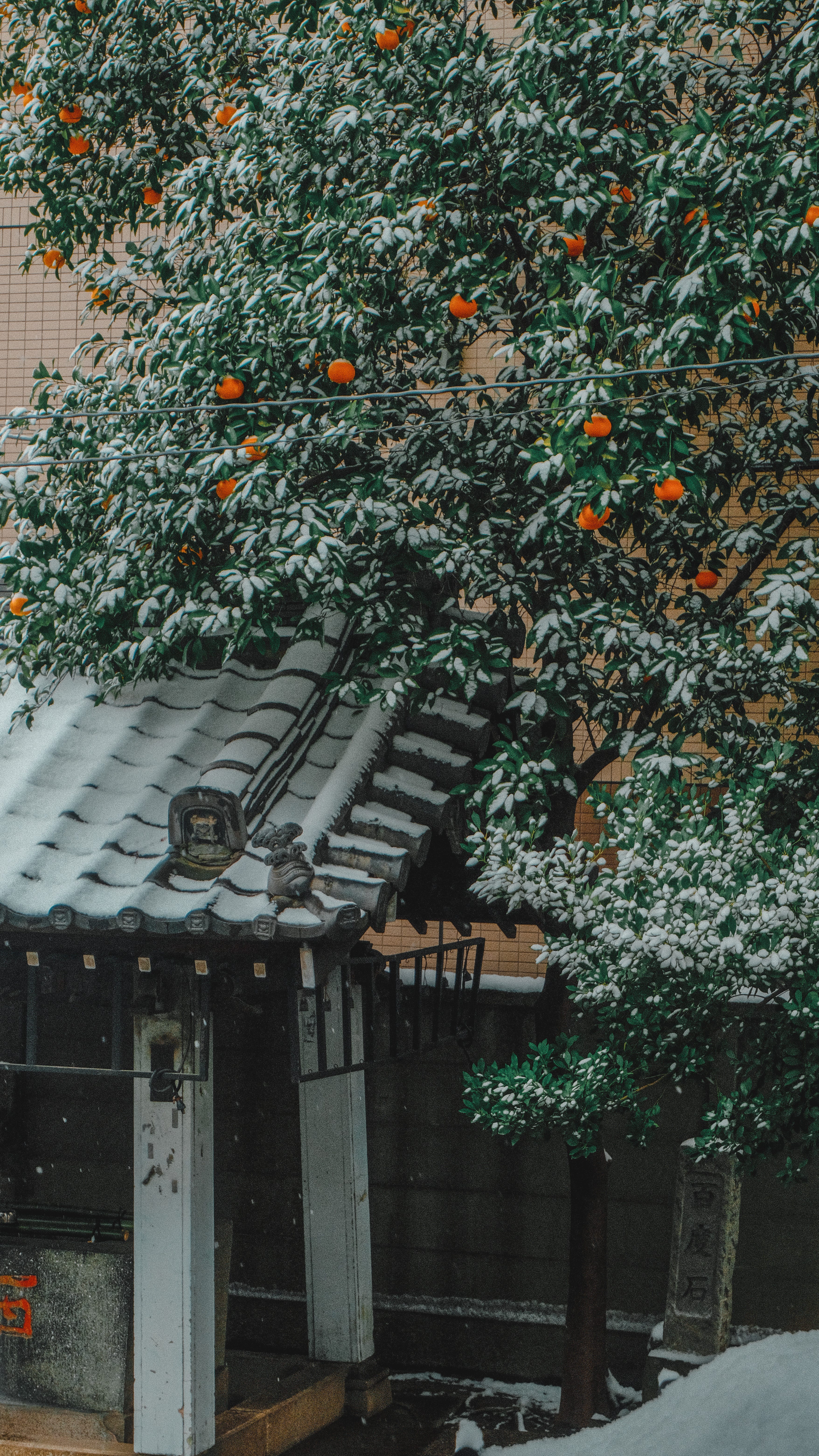
At my fourth temple, oranges hung bright against branches shaped like open hands. Maple leaves caught snow like lace. The air felt padded. Sound absorbed. Even the city’s usual hum softened to something monastic.
A man who worked/looked after? there saw me shivering and beckoned me inside.
Into a vast prayer hall. Full of old sacred items. And the world’s biggest brass (?) chandelier thing? That filled most of the space. I knew I was surrounded by extremely important and sacred items passed down centuries.
But it was just me.
Empty.
Only me and the echo of my own breathing.
/
He handed me tea, the tiny porcelain cup warm against my palms. We had a language barrier so instead we spoke in gestures. Exaggerated nods. Soft smiles. He encouraged me stay and prayer or sit.
And he disappeared so I would not feel watched. Returned occasionally, careful not to intrude. A choreography of kindness.
/
It felt like stepping through another gate.
Inside, I thought about how the torii is always open because life is always passing. There is no fixed state to arrive at. Only thresholds. Only crossings. Only this moment unfolding into the next.
Snow outside. Silence inside.
/
I have spent so much of my life trying to hold onto things. Health. Time. Certainty. But snow refuses possession. It lands on your glove and is already leaving.
Maybe that is mercy.
/
By the time I left, my bones were cold. I had taken a hundred photographs, trying futilely to trap what cannot be trapped. Ramen called to me like scripture. So did it call to everyone else. Eventually, I found a bowl steaming like absolution.
/
Later, I went to Blue Lug before it closed for the week. Another small crossing before departure.
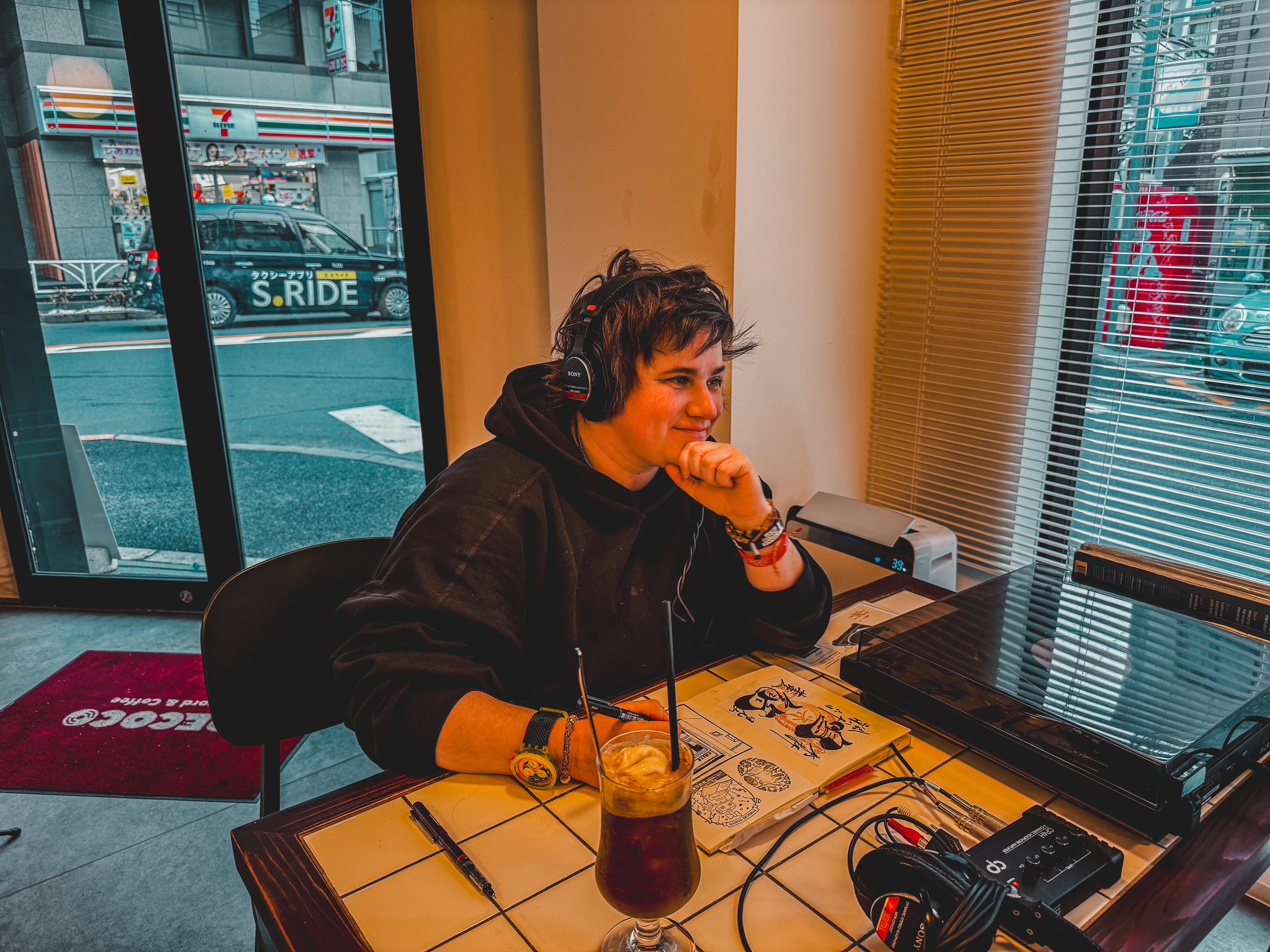
In Shibuya I slipped into a vinyl listening café. Ordered a Coke float. Japanese city pop swelled through old speakers. J hip hop hummed. Outside, snow still tracing the edges of buildings.
/
The day ended with £35 of bath salts, absurd and perfect, a way of carrying warmth forward into colder days.
Snow in Tokyo is temporary.
By morning, it may be gone. Pavement exposed. Trains on time. The city resuming its relentless forward motion.
But today I walked through gates.
Today I stood in a cemetery while the world was rewritten in white.
Today I remembered that everything passes. Illness, strength, snow, even this version of me.
And maybe the miracle is not that snow falls.
Maybe the miracle is that we get to pass through it at all.